

| Seismic Approach to Quality Management of HMA MnDOT Contract No. 1034287 Federal Project Number: TPF-5 (341) Execution: January, 2020 - December, 2021 |
 | |  | |  | |  | |  | |  | |  | |  |
| PROJECT PROGRESS (September, 2020) |
Project Tasks | Summary (see details)
- Task 1: Project Management and Administration
Task 2: Hardware Development (Seismic Data Acquisition System) & Testing
Task 3: Software Development & Testing
Task 4: Delivery and Demonstration of Seismic Data Acquisition System and Software
Task 5: Final Report
Year 1 (2020):
Year 2 (2021):
 |  |  |  |  |  |  |  |  |  |  |  |
Summary
- Project Updates at 2020 NRRA Pavement Workshop
Project updates have been presented as a 2020 NRRA workshop series on Thursday, September 3, 2020. The initial development,
progress made so far, and the future direction of the project development have been presented during a 1-hour workshop. The overall
summary of the project and the software development were presented by the principal investigator, Dr. Choon Park, while the hardware
development was presented by co-investigators, Dr. Nils Ryden and Dr. Josefin Starkhammar. A total of 45-min presentations were
followed by a 15-min Q&A session. NRRA posted the entire presentation at YouTube.
- Automatic Muting (AUTO Mute) - Refinement Testing with Data Acquired on September 1, 2020
- New field operations were conducted on September 1, 2020, at the same place used previously for data sets collected during July and
August. Among many 48-channel records collected (about 500 of them), two TDMS files were obtained from the Team Sweden; i.e.,
“2020-09-01_19_12.TDMS” and “2020-09-01_19_24.TDMS” files that contained 100 and 50 field records, respectively. The same pre-
trigger time of 0.5-ms was used. This 0.5-ms time, firstly used in August, turned out later (late August) too short to capture the earlier-
arrival Lamb waves for the records obtained from the reverse shots (i.e., from the impact by the source attached on the back-side of the
receiver array off the 48th channel) because of the longer distance between the impact point and the array. There was a total of 32
reverse-shot records for the “2020-09-01_19_12.TDMS” data set that contained a total 100 records, while all 50 records were from the
forward shots for the “2020-09-01_19_24.TDMS” data set.
First, the AUTO Mute algorithm previously developed and tested on a limited amount of field records (e.g., data sets from July and
August) has been tested on these two data sets to evaluate the accuracy in the muting windows for air-wave and pre-Lamb waves.
Results for all 150 records showed the AUTO Mute was highly effective when the raw records and the muted records were visually
compared side-by-side. These comparisons of seismic records are presented in this report. Second, data qualities are examined in
dispersion images to evaluate the effective recording of Lamb waves. While all reverse-shot records did not have any Lamb waves in
the target frequency bands that are needed for the velocity (Vs) and thickness (H) evaluations (e.g., 10 kHz – 30 kHz), 54 forward-shot
records (out of 68 such records) were in good quality that can allow a reliable Vs and H evaluations for the “2020-09-01_19_12.TDMS”
data set. On the other hand, 39 records (out of 50) were in good quality for the “2020-09-01_19_24.TDMS” data set. These results put
the “accept” rate of 80% and 78% for the two respective data sets.
Study of the optimum configuration for the 1D array has been one of the main goals of using the old (48-channel) system to collect field
data under various different conditions (e.g., different section of the road, different temperatures, different source characteristics, etc.).
Based on the test results from a limited amount of field data sets (e.g., the ones from July and August), it has been tentatively assumed
that the 16-channel array with 3 times receiver spacing (i.e., 3dx) would be the most optimum configuration. With relatively vast
amount of field records now available (i.e., 150), the test has been repeated to reinsure this 3-dx-16-channel assumption. This time, the
AUTO Mute was applied to both full 48-channel records and the resampled 3dx-16-channel records to examine if there is any reduction
in the effectiveness due to the reduced number of channels. The AUTO Mute results of 48-channel and 3dx-16-channel records are
presented side-by-side in this report for visual comparison.
Then, dispersion images for the 3dx-16-channel records were obtained and compared side-by-side with those from the full (48) channel
records by displaying them for the “2020-09-01_19_12.TDMS” data set in this report. No noticeable visual differences were observed
from both the raw-seismic-data and the dispersion-image comparisons for the target frequency band (e.g., 10 kHz – 30 kHz). However,
more systematic comparisons will be made in the near future by comparing key analysis results (e.g., Vs and H) from both data sets.
- TDMS Data Format
- The C++ codes written by a freelancer have been refined so that they can be incorporated into the ParkSEIS-HMA software module
without any clash. It seems the codes were written in C codes (instead of C++) because the NI library components support only C
codes. Some parts of the codes were restructured so that they contain only C components without foreign C++ components (e.g.,
classes). It seems that they are properly working, at least, with all TDMS files collected so far. The new round of testing will be executed
when the TDMS file of finalized structure is collected by using the new system for 1D array (sometime in November).
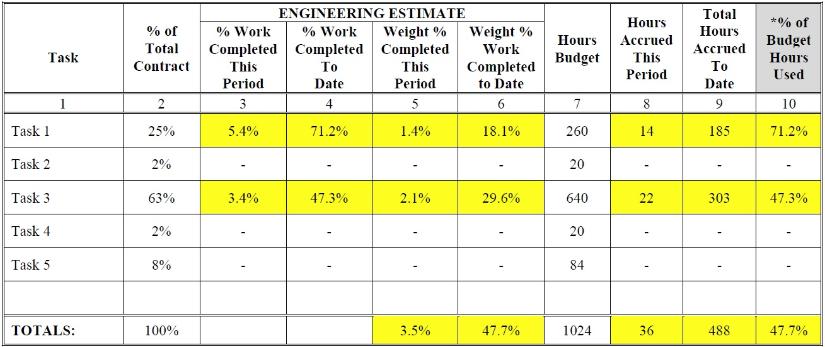
| Progress Table (Prime Contractor - Park Seismic LLC) - September, 2020 |
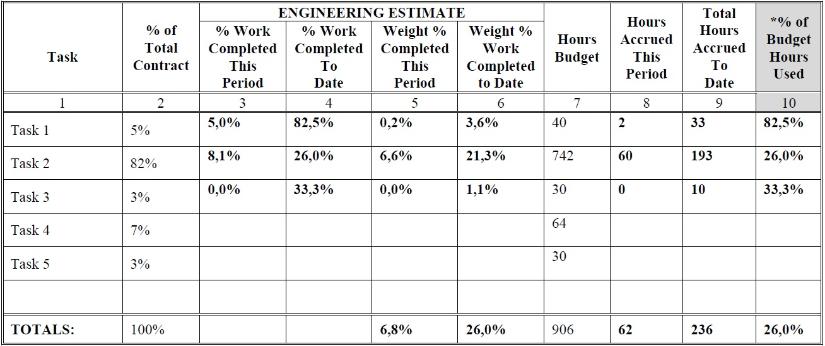
| Progress Table (Sub Contractor - Norrfee Tech) - September, 2020 |

Park Seismic LLC, Shelton, Connecticut, Tel: 347-860-1223, Fax: 203-513-2056, Email: contact@parkseismic.com
 |  |