

| Seismic Approach to Quality Management of HMA MnDOT Contract No. 1034287 Federal Project Number: TPF-5 (341) Execution: January, 2020 - December, 2021 |
 | |  | |  | |  | |  | |  | |  | |  |
| PROJECT PROGRESS (July, 2020) |
Summary
- Field Data Sets from Newly Constructed Asphalt Road near Lund, Sweden (July 22, 2020)
Field data sets acquired on July 22, 2020, on a newly constructed asphalt pavement near Lund, Sweden, are processed and evaluated
for various purposes. The data sets were collected by using the old system (“SYS-RYD-2019”). The overall data quality is evaluated as
“excellent” from raw field records and corresponding dispersion images that clearly show well-developed Lamb wave arrivals and the
fundamental-mode anti-symmetric Lamb dispersion (A0), respectively. Below are one of the several hundred records obtained (> 500) in
the field (left) and corresponding dispersion image and other spectral characteristics (right). An approximate inversion results show
velocity (Vs = 1400 m/), thickness (H = 0.1 m), and Poisson’s ratio (POS = 0.3) (bottom). These are the results Norrfee Tech provided.
- Further Testing of Air-Wave Alleviating Techniques
- Testing of various multichannel techniques previously tested/developed that can alleviate adverse influence of air waves on the target
analyses (i.e., Lamb and Impact Echo analyses) are tested for ten (10) randomly selected records from the data set on July 22, 2020.
Three previously developed techniques are tested that can alleviate the air-wave energy as much as possible without compromising
other useful attributes of obtained wavefields [e.g., wavefields for Lamb and Impact Echo (IE) analyses]. They are surgical mute
(MUTE), fk-filter (FK), and air-wave subtraction by using moving-window LMO stack (AIR-SUBTRACTED). This report contains more
details.
- Quality Control (QC) Parameters
- Testing of several quality control parameters for a particular type of wave (e.g., air or Lamb waves) such as overall amplitude (“Amp”),
arrival time in ms [“msT0 (ms)”], velocity [e.g., “Vair (m/s)”], and peak frequency [“Fpeak (kHz)”] is performed by using the
aforementioned ten (10) field record. This report contains more details.
- TDMS Data Format
- A project to build a C++ module to read the TDMS file of seismic data saved by the acquisition system being developed at Norrfee Tech
was launched as of June, 2020. The project will complete a separate C++ program that reads TDMS files and converts them into the
ParkSEIS data format, which is the standard format for the software package being developed. It seems necessary to use some library
files provided by National Instrument (NI) for some functions to work properly within the C++ codes. This project is about to finish.
Project Tasks | Summary (see details)
- Task 1: Project Management and Administration
Task 2: Hardware Development (Seismic Data Acquisition System) & Testing
Task 3: Software Development & Testing
Task 4: Delivery and Demonstration of Seismic Data Acquisition System and Software
Task 5: Final Report
Year 1 (2020):
Year 2 (2021):
 |  |  |  |  |  |  |  |  |  |  |  |
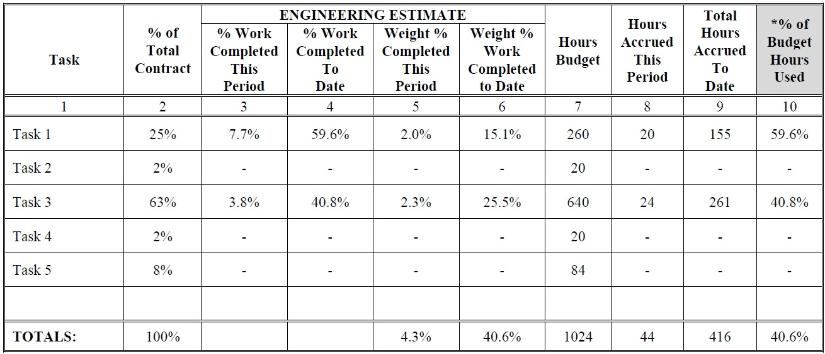
| Progress Table (Prime Contractor - Park Seismic LLC) - July, 2020 |
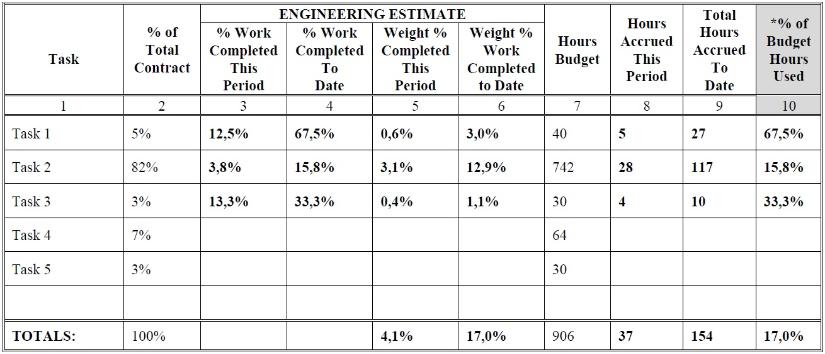
| Progress Table (Sub Contractor - Norrfee Tech) - July, 2020 |

Park Seismic LLC, Shelton, Connecticut, Tel: 347-860-1223, Fax: 203-513-2056, Email: contact@parkseismic.com
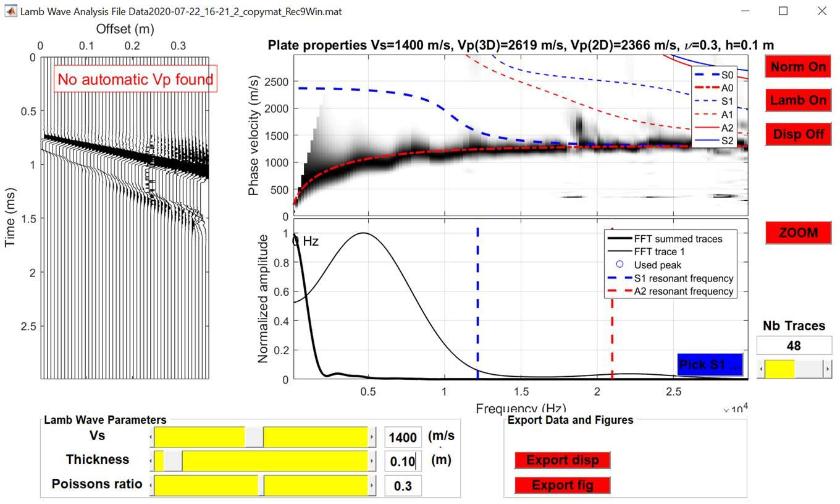
| (One, #9, out of several hundread records collected) |
 |  |