

| Seismic Approach to Quality Management of HMA MnDOT Contract No. 1034287 Federal Project Number: TPF-5 (341) Execution: January, 2020 - December, 2021 |
 | |  | |  | |  | |  | |  | |  | |  |

Park Seismic LLC, Shelton, Connecticut, Tel: 347-860-1223, Fax: 203-513-2056, Email: contact@parkseismic.com
| PROJECT PROGRESS (March, 2020) |
Summary
- Hardware Parts Ordered
Parts to build multichannel acquisition system (MAS) have been ordered at National Instruments (NI). They are the main components
needed to build a 64-channel acquisition system (expandable up to 96 channels). Other accessory parts (e.g., MEMS microphones) will
be ordered soon.
- Optimum Number of Channels Per Array (March, 2020)
The final system will consist of multiple linear (1D) MEMS microphone arrays arranged along the transverse direction side by side (see
Figure 5 in the proposal). It is critically important to figure out the optimum configuration of the one (longitudinal) array in the channel
spacing (dx-opt) and the number of channels allocated per array (NCh-opt). By using a field data set acquired with a 48-channel MEMS
microphones with a very small channel spacing (i.e., dx=0.752 cm) (i.e., spatially over-sampled) over a special type of asphalt pavement
in Sweden, a series of test have been executed through two types of spatial re-sampling approaches; i.e., the simple re-sampling of
decimation and the stack-re-sampling approaches. The former simply reselects existing traces (channels) from the original full (48-
channel) field record with a greater spacing (e.g., 2dx, 3dx, 4dx, etc.) by discarding in-between traces. On the other hand, the latter
stacks (instead of discarding) them to make a new trace obtained with a greater spacing. This stack approach, called "receiver array",
has been used for a long time in the seismic exploration for the purpose of attenuating the strong, but propagating at very low velocity,
ground roll surface waves. These two re-sampling approaches are compared in the performance of enhancing the signal (Lamb) waves
while attenuating the noise (air) waves at the same time.
According to the test results, it seems a 16-channel array with a 5dx (=3.76 cm), or a 4dx (=3.008 cm), channel spacing that connects
(in parallel) all in-between MEMS microphones arranged with the current spacing of 0.752 cm. This means the stack-re-sampling
approach turned out more effective than the other simple re-sampling (decimation) approach. With this configuration, the system will be
able to handle HMA layers in a thickness (H) range of 4 cm (Hmin) - 20 cm (Hmax).
see SUMMARY of the procedures and results.
see APPENDICES for procedural details.
- Monthly Project Meeting (March 31, 2020) (Minutes)
Project Tasks | Summary (see details)
- Task 1: Project Management and Administration
Task 2: Hardware Development (Seismic Data Acquisition System) & Testing
Task 3: Software Development & Testing
Task 4: Delivery and Demonstration of Seismic Data Acquisition System and Software
Task 5: Final Report
Year 1 (2020):
Year 2 (2021):
 |  |  |  |  |  |  |  |  |  |  |  |
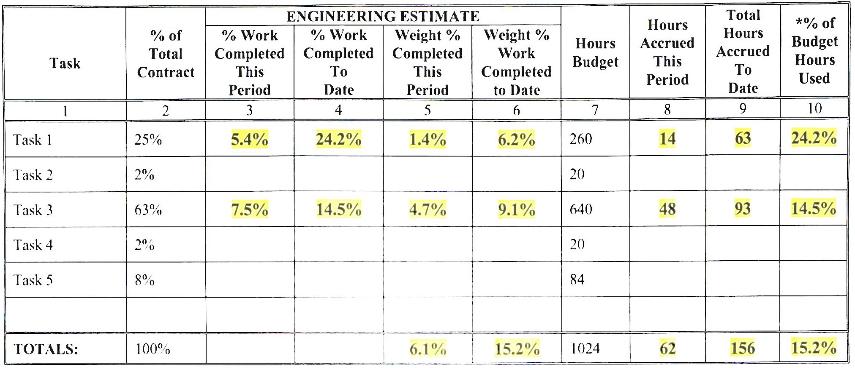
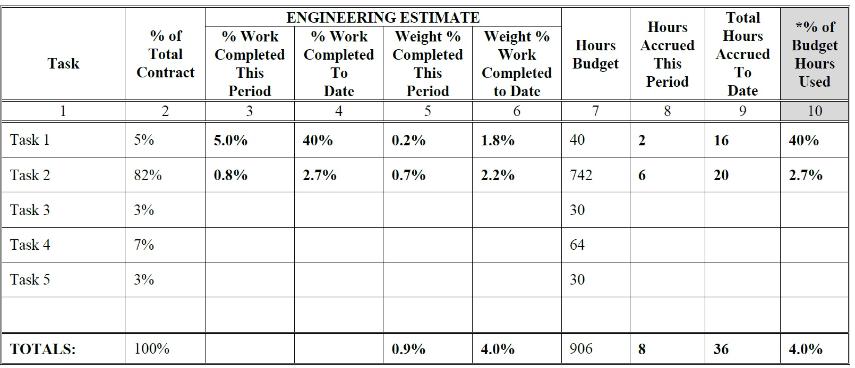
| Progress Table (Prime Contractor - Park Seismic LLC) - March, 2020 |
 |  |